starting & focus · 2-minute read
ADHD task paralysis: what to do in the first two minutes
in 30 seconds
- “ADHD paralysis” isn’t a medical diagnosis, but a common term for feeling frozen and unable to start.
- It’s linked to executive function: overload can make planning and starting harder.
- Way out: name why it’s stuck, take the smallest possible physical step, give it two minutes.
Task paralysis is the stuck feeling of knowing what you need to do but not being able to start. With ADHD it often comes from a task being too big, unclear, boring or uncomfortable. The way out is usually not more willpower but a smaller start: name why it’s stuck, then do one two-minute physical step.
The first two minutes
- Name why it’s stuck. Too big? Unclear? Boring? Uncomfortable? Too tired? Too many choices?
- Make the first step physical. A verb you can picture: open, find, write one sentence, put it on the table.
- Set a two-minute timer. You only owe the task two minutes.
- Start ugly. The first try doesn’t have to be good. Nobody sees it.
- Decide again when the timer ends. Keep going, or stop. Both count.
Six reasons, six small fixes
- Too big: shrink the step until it feels almost silly.
- Unclear: write the step as a verb.
- Boring: pair it with music, a drink or a person nearby.
- Uncomfortable: aim for a rough version you can fix later.
- Tired: care first. Water, a snack, five minutes of rest.
- Too many choices: pick one at random. Any start is a good start.
Let the page find your first step
Type the task, tap why it feels stuck, get one two-minute start.
Open the first step finderWhat usually doesn’t help
Waiting for motivation, planning the whole project before you start, and being hard on yourself afterwards. If today went sideways, start again from today. There’s nothing to catch up on.
Questions people ask
Is task paralysis the same as procrastination?
They can look the same from outside. With task paralysis you usually want to start but feel frozen; naming why it’s stuck helps you pick the right fix.
Why does a two-minute step work?
It lowers the barrier to starting. Cleveland Clinic’s first tip is the same idea: take the smallest possible next step.
What if two minutes is still too much?
Make it smaller: open the file, put the letter on the table, stand up. A tiny start still counts.
When to get support: This guide shares everyday strategies, not medical advice. If this is making daily life hard for weeks, talk to a doctor or a mental health professional. If you’re in crisis, you can find free, confidential support in your country at findahelpline.com.
Sources
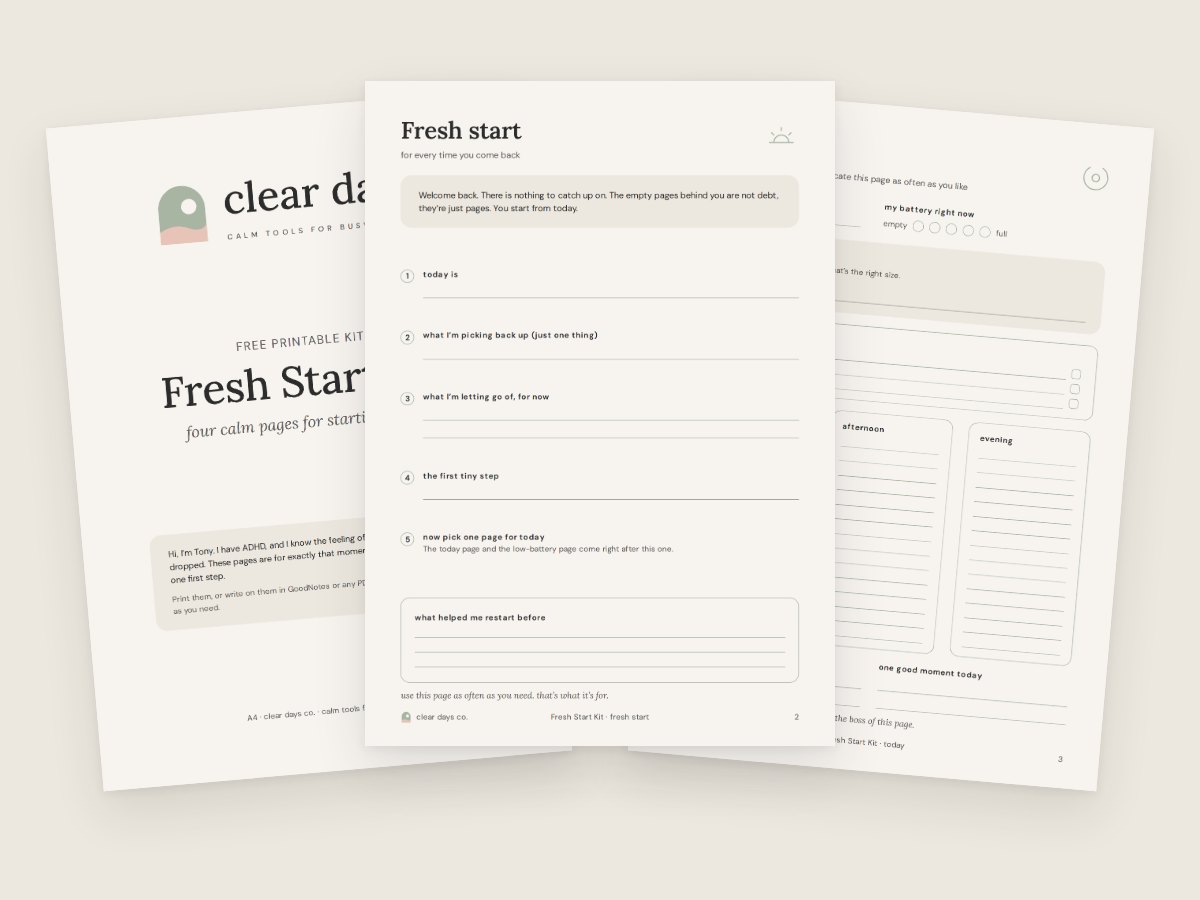
free printable kit
Free: the Fresh Start Kit
Six calm pages for the moment you come back to a plan you dropped: a fresh start page, a one-first-step today page, a low-battery day page and a write-it-all-down page. A4 and US Letter.
Get the free kitNo catching up. Just one first step.