money & admin · 2-minute read
The ADHD tax: what it is, and seven ways to pay less of it
in 30 seconds
- “ADHD tax” is an informal term for money lost to things like late fees, replacing lost items and impulse buys.
- A 2017 survey of 544 adults found that more ADHD symptoms went with more late fees, overdrafts and payday loans.
- Automate what you can, add friction to impulse buys, and give important things one fixed home.
The “ADHD tax” is an informal name for money lost to ADHD-related slips: late fees, replacing lost things, impulse buys, forgotten subscriptions. It isn’t a moral failing, and small systems can shrink it a lot.
What we know
ADDitude describes the ADHD tax as money lost to impulse spending, replacing lost items, late fees and similar costs. Research is still early: in a 2017 study (Beauchaine, Ben-David and Sela, PLOS ONE), 544 adults filled in questionnaires, and those reporting more ADHD symptoms also reported more late credit-card fees, overdrafts, payday loans and job changes. It was self-reported data and a preliminary analysis, but it matches what many people describe.
Seven ways to pay less of it
Automate the bills you can
Autopay or standing orders turn “remember to pay” into nothing to remember.
Tiny version: Set up autopay for one bill.
Keep one money hour a month
CHADD’s money tips include organizing financial paperwork and making spending and saving plans. One short, regular slot is enough.
Tiny version: Put a 20-minute slot in your calendar.
Add friction to impulse buys
Wait 24 hours before buying anything non-essential. Leave it in the cart.
Tiny version: Delete one saved card from one shop.
Give keys and wallet one home
CHADD suggests a launch pad by the door.
Tiny version: One bowl by the door.
Calendar every renewal
Free trials, subscriptions, insurance, ID cards: one reminder a week before each.
Tiny version: Add the next one you know of.
Do a subscription sweep
Look at last month’s statement and cancel one thing you don’t use.
Tiny version: Find one.
Start from this month
Old fees are sunk costs. Shame doesn’t pay bills; systems do.
Make the boring list feel smaller
Write your money tasks in the picker and let it choose one.
Open the task pickerasking to waive a late fee
Hi, I missed the payment date by a few days and have paid now. Could you waive the late fee as a one-time courtesy? Thank you.
Prefer paper? The Clear Days 2027 planner includes a monthly money map and a bills-at-a-glance page.
Questions people ask
Is the ADHD tax a real thing?
The term is informal. Early research and many personal reports point the same way, but the evidence is still limited.
Is it my fault?
It’s linked to ADHD symptoms, not character. Systems that do the remembering for you help more than blame.
Where do I start?
With the one bill that costs you the most when it’s late.
When to get support: This guide is general and not financial advice. If money worries feel overwhelming, many countries have free debt advice services. If you’re in crisis, you can find free, confidential support in your country at findahelpline.com.
Sources
free printable kit
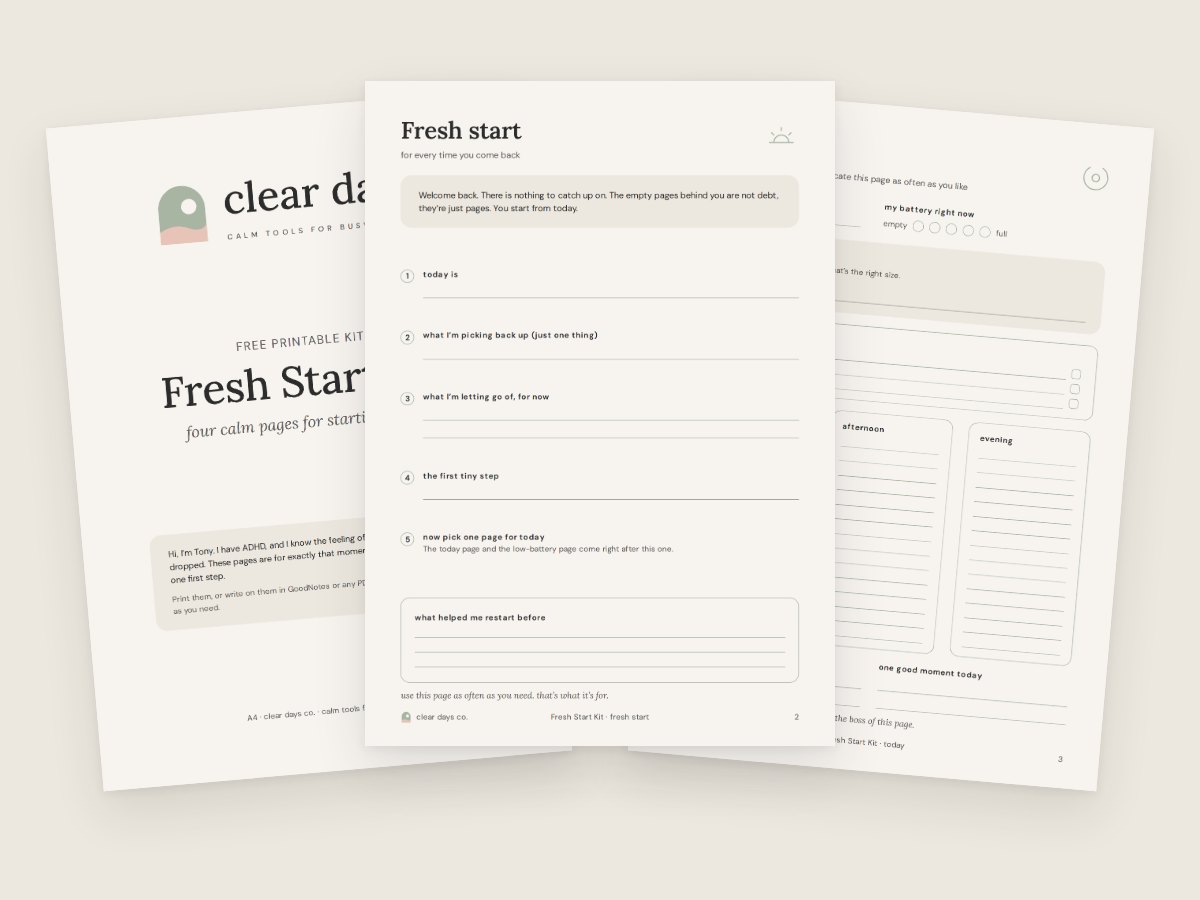
Free: the Fresh Start Kit
Six calm pages for the moment you come back to a plan you dropped: a fresh start page, a one-first-step today page, a low-battery day page and a write-it-all-down page. A4 and US Letter.
Get the free kitNo catching up. Just one first step.